FDR 3D Printing Service: The New Frontier of Micro-Precision
When standard additive manufacturing technologies reach their physical limits, Fine Detail Resolution (FDR) takes over.
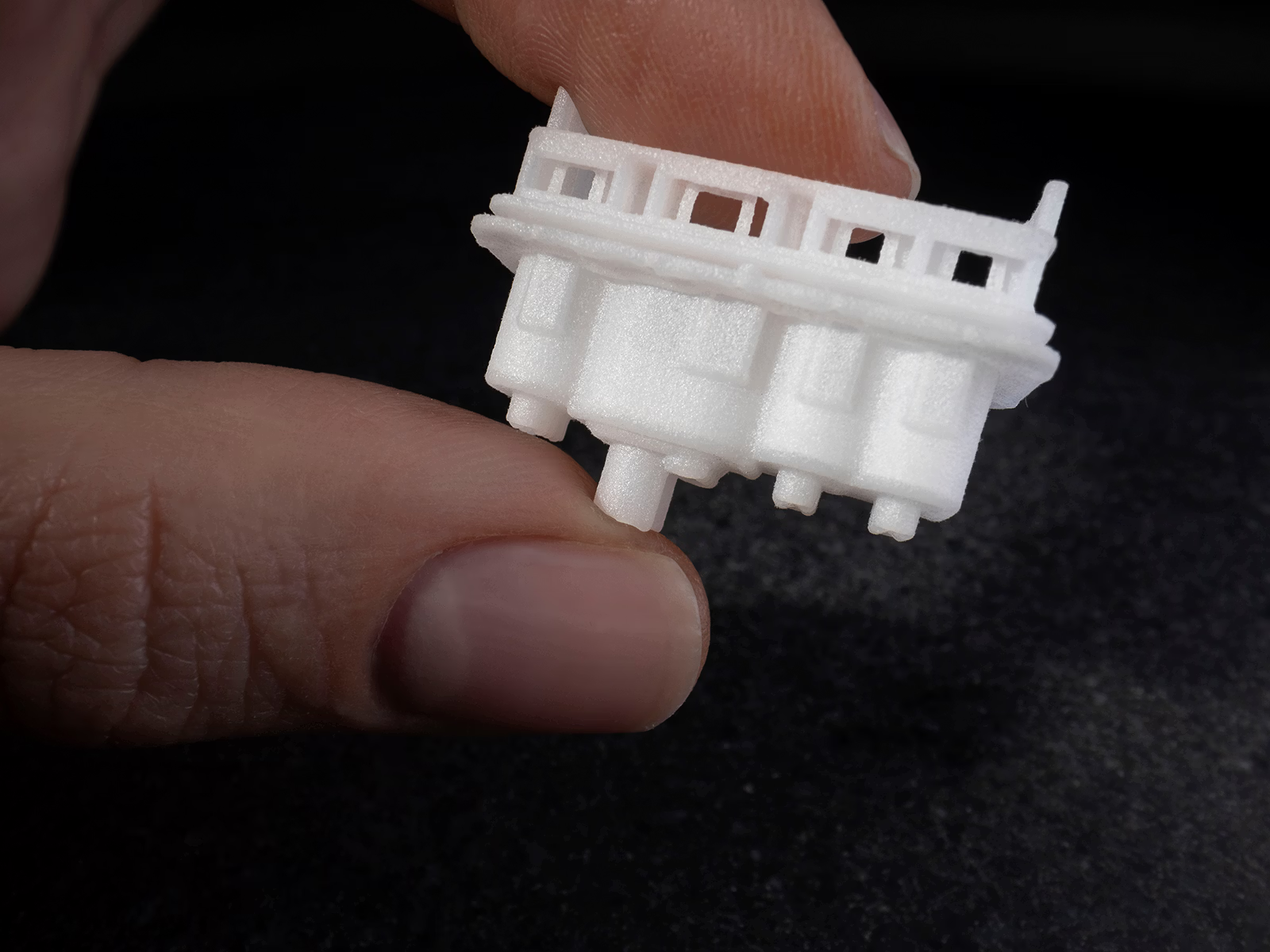
By utilizing a specialized CO laser with an ultra-fine beam diameter, Prototal Group delivers a polymer additive manufacturing technology capable of producing intricate, high-definition components that were previously only possible through high-end injection molding.
FDR is not just about being small; it is about achieving sharp-edged feature resolution, high detail resolution, and functional complexity in PA 1101 at a scale that redefines what is possible in additive manufacturing – from functional prototypes to production quality parts.
Powered by
High-Resolution Performance for Complex Systems
FDR technology bridges the gap between the speed of additive manufacturing and the intricate detail of micro-moulding. By focusing energy into a beam significantly smaller than standard SLS lasers, we can produce wall thicknesses and internal geometries that maintain the mechanical properties and structural integrity required at a microscopic level – while delivering a surface quality that rivals injection-molded components.
Industries benefiting from FDR:
- Electrical and Electronical Equipment: Micro-connectors, intricate sensor housings, and miniaturized enclosures
- Medical Technology: Micro-fluidic components and surgical tools
- Aerospace & Defence: Lightweight, miniature actuators and sensors
- Automotive: High-precision connectors for e-mobility and autonomous systems
The Power of PA 1101
Unlike standard polymers, the FDR process utilizes PA 1101, a bio-based polyamide. This material offers the high impact resistance and elongation at break required for functional living hinges and snap-fits, ensuring that even your smallest components have the mechanical properties needed to be rugged enough for end-use industrial applications.
Miniaturisation at Scale
As industries push for smaller, lighter, and more integrated devices, FDR provides the tool-less path to miniaturisation. We enable engineers to iterate rapidly on micro-scale functional prototypes and move directly into low volume production – and onward to serial production – without the multi-month lead times of micro-tooling.
Surface Engineering & Durability
While FDR ensures precision, Vapor Smoothing provides the finish needed for true functionality. By sealing PA 1101 without losing sharp details, it eliminates porosity and achieves an IP-rated, non-porous surface. The result is a surface quality with a professional, injection-molded look that significantly increases the fatigue life and durability of your micro-components.
Advanced Production Facility
Our FDR technology is centralized at our facility in Dornbirn, ensuring specialized process control. For medical applications requiring the highest regulatory standards, we offer production quality parts under ISO 13485 certification. This combines micron-level precision with the rigorous documentation and traceability essential for the global healthcare sector.
PA 1101
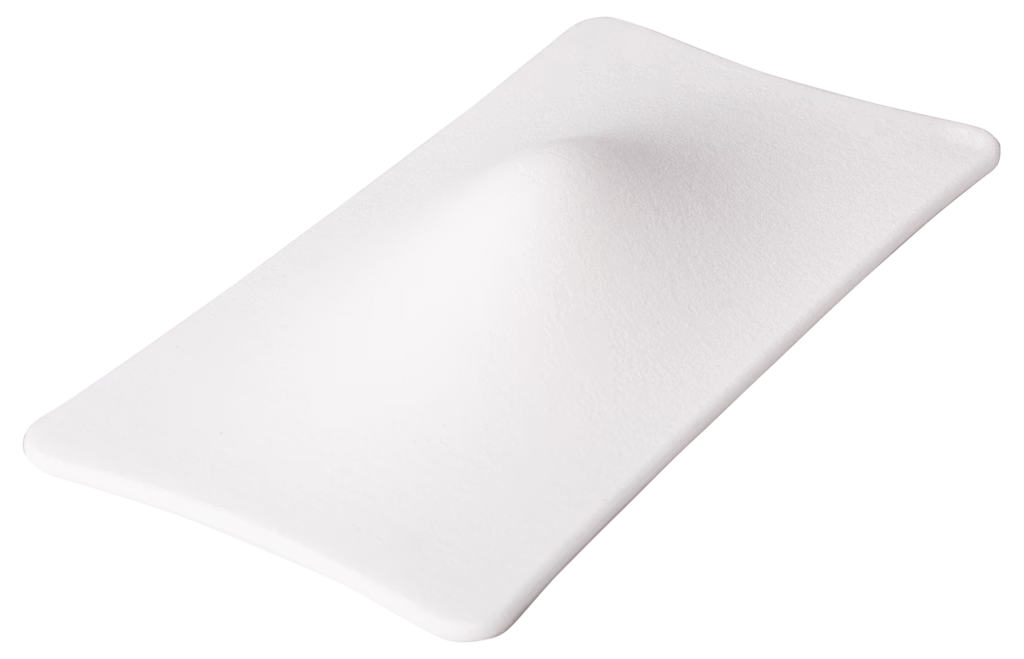
Engineered for micro-scale functional integrity, PA 1101 is a bio-based polyamide that offers exceptional impact resistance and the high elongation required for complex, moving assemblies.
- Exceptional Mechanical Toughness
- Superior Fine-Detail Definition
- Durable Chemical Resistance
Datasheet at a Glance
| Fine Detail Resolution | Density (g/cm³) | Tensile strength (MPa) | Tensile modulus (MPa) | Elongation at break | Charpy IS (kJ/m² @ 23°C) | HDT (°C @ ~1.8 MPa) |
|---|---|---|---|---|---|---|
| PA 1101 | 1.03 | XY 50 / Z 48 | XYZ 1650 | XY 30% | XY N / Z 85 (unnotched) | 47 |
The data shown is indicative and intended for reference only. Material properties may vary depending on printing conditions and technology. Although care has been taken to ensure accuracy, typographical or data entry errors may occur. For authoritative specifications, please refer to the original manufacturer datasheets provided under each material.

3D Printing Guidelines
Our helpful guides are specifically designed to assist you before submitting your design to us. We always strive to achieve the best possible outcome, and by following our guidelines, you can be confident that your design will be of the highest quality.
Get in touch with us if you need guidance, we are happy to help you!
How FDR Achieve Micron-Level Accuracy
The FDR process is a specialised evolution of Selective Laser Sintering (SLS), optimized for extreme detail:
The Step-by-step Process in FDR
- Digital Pre-Processing: Your CAD data is sliced at ultra-thin layer heights to capture every nuance of the geometry.
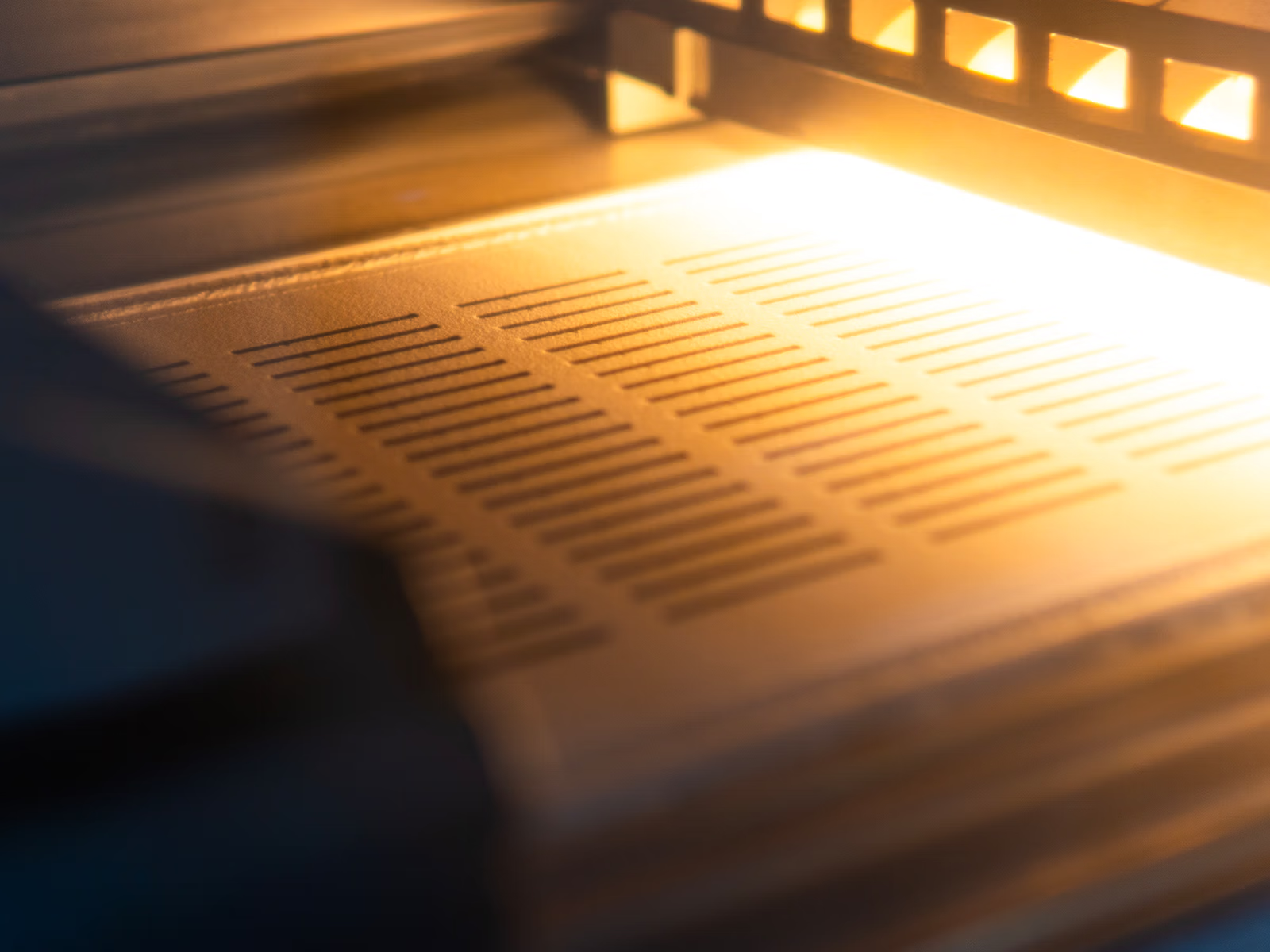
- Ultra-Fine Laser Sintering: A specialized CO laser, featuring a beam diameter significantly smaller than industrial standards, scans the powder bed of PA 1101.
- High-Resolution Fusion: Because the energy is so concentrated, the heat-affected zone is minimised, allowing for sharper corners, thinner walls (down to 0.22 mm), and intricate internal channels.
- Precision Cooling: Controlled thermal management ensures that the micro-features remain dimensionally stable and free from warping during the solidification phase.
Bring Your Design to Life
"*" indicates required fields
By submitting this form, you agree to our Privacy Policy. We use the information you provide to respond to your inquiry and provide requested manufacturing services.
Quote Your Next Project
Looking for high-quality industrial 3D printing solutions tailored to your needs? Our team is ready to provide a detailed quote for your project. Simply share your specifications, and we’ll deliver a clear, competitive estimate — no surprises, just precision and reliability.
Why choose us?
- 3D printing solutions for any scale and complexity
- Fast and accurate quoting process
- Local presence close to your business and business needs

FAQs
Do you have questions regarding Industrial 3D Printing? Find the most common questions and answers about the subject here.
Industrial 3D printing, also known as additive manufacturing, offers a wide range of advantages that have made it increasingly popular across various industries. Here are some key advantages of 3D printing:
- Design Flexibility: 3D printing allows for intricate and complex designs that are difficult or impossible to achieve with traditional manufacturing methods. It offers design freedom, enabling the creation of geometries and structures that were previously impractical or cost-prohibitive.
- Rapid Prototyping: 3D printing enables rapid prototyping, significantly reducing the time and cost involved in developing prototypes. It allows for quick iterations and design improvements, accelerating the product development cycle.
- Cost Efficiency: Traditional manufacturing often involves high setup costs and tooling expenses. With 3D printing, these costs can be minimised or eliminated since it requires little to no tooling. It is particularly advantageous for low-volume production or customised/personalised manufacturing.
- Reduced Waste: 3D printing is an additive process that minimises material wastage. It only uses the exact amount of material required for building the object, leading to more sustainable and environmentally friendly manufacturing.
- Complex Geometry and Customisation: 3D printing enables the creation of complex geometries, intricate internal structures, and customisable designs. This is particularly beneficial for industries such as aerospace, healthcare, and architecture, where highly specialised and personalised products are required.
- Supply Chain Optimisation: Additive manufacturing can decentralise production, allowing for on-demand manufacturing closer to the point of need. This can lead to reduced lead times, lower transportation costs, and optimised supply chains.
These advantages make Industrial 3D printing a valuable tool in various industries, including aerospace, automotive, healthcare, consumer goods, and more. By leveraging the benefits of 3D printing, businesses can gain a competitive edge, drive innovation, and unlock new possibilities in product development and manufacturing processes.
We offer a range of post-processing manufacturing services to ensure your 3D printed parts meet the highest standards of quality, precision, and aesthetics.
Polymer 3D Printing Post-Processing
- Support Removal & Sanding
- Vapour Smoothing
- Vibro Polishing
- Bead Blasting
- Colouring
- Primer, Painting, coating & lacquering
- Threaded/non-threaded inserts
- Assembly
Metal 3D Printing Post-Processing
- Head Treatment
- EDM Wiring & Support Removal
- Dry & Wet blasting
- Vibro Polishing
- CNC Machining
- Anodising
- Polishing
- Painting
At Prototal Group, we offer a lot of different 3D printing and rapid prototyping technologies:
- Multi Jet Fusion – MJF
- Selective Laser Sintering – SLS
- Stereolithography – SLA
- Selective Absorption Fusion – SAF
- Fine Detail Resolution – FDR
- PolyJet a material jetting technology
- Fused Deposition Modeling – FDM
- Digital Light Processing – DLP
- Direct Metal Laser Sintering – DMLS (also known as SLM)
We have a wide range of materials within different advanced technologies. We are always introducing new materials, but right now this is what we offer:
MJF
- PA 11
- PA 12
- PA 12 W
- PA 12 S
- PA 12 GB
SLS
- FS3200PA-F
- PA 11
- PA 2200
- PA 3200 GF
- PA 2210 FR
- PA 2241 FR
- PA 603-CF
- PA 620-MF
- PA 640-GSL
- “Rubber” 50A-80A
- PA 12 Aluminium filled
- TPU 88A
- TPU 59A
- PEEK*
- PA 6*
- BlueDP 3S approved for food contact*
*Subcontracted materials
FDR
- PA 1101
SAF
- Polypropylene (PP)
SLA
- Accura ClearVue
- Accura Xtreme
- Accura 25
- Accura HPC
- Somos® WaterClear Ultra
DLP
- PRO-BLK 10
- FLEX-BLK 20
- Hi-Temp 300 AMB
- Rubber 65A Shore
PolyJet
- All Digital Materials from Stratasys
DMLS / SLM
- Aluminium (AlSi10Mg)
- Titanium (Ti6Al4v)
FDM
- Ultem (9085 & 1010)
- Polycarbonate (PC)
- PC/ABS
- PC-ISO
- ABS (ESD7, M30 & M30i)
- ASA
- SR-30
- PEKK & PEKK-ESD
- PA 12 CF
- Polypropylene (PP)
- And other engineering materials
The maximal size of part printable is dependable on the 3D printing technology and the geometry of your part:
- SLS – 700x380x580 mm
- MJF – 380x284x380 mm
- FDR – 200x250x125 mm
- SAF – 315x208x293 mm
- SLA – 1500x750x550 mm
- FDM – 900x600x900 mm
- DLP – 150x70x350 mm
- PolyJet – 490x390x200 mm
- DMLS – 500x280x365 mm
Manufacturing should not be transactional. At Prototal Group we value a partnership, which is why you will get a dedicated contact person close to your operations that knows your business and business needs. To start our future partnership, please reach out to the local team within your area that can be found under Contact us or send us an e-mail:
- Norway: post@prototal.no or +47 74 09 06 00
- Sweden: am@prototal.se or +46 36 38 72 00
- Denmark: 3dp@prototal.dk or +45 43 99 37 36
- United Kingdom: info@prototaluk.com or +44 1635 635855
- Italy: info@prototalgroup.it or +39 733 892665
- Austria, Germany & Switzerland: 3dp@prototalgroup.at or +43 5572 52946-9
As a flexible partner we can offer lead times down to 1 working day depending on your part geometry and the selection of manufacturing technology, material, post-processing and quality control.*
- Industrial 3D Printing in Polymer: Typical 2-3 working days*
- Industrial 3D Printing in Metal: Typical 5-7 working days*
- Injection Moulding with alu tooling: Typical down to 15 working days*
- Vacuum Casting: Typical 6-8 working days*
*While Prototal Group offers industry-leading turnaround times, all lead times are provided as estimates. Lead times are based on standard operating conditions and the selection of the most efficient regional technology hub for your project. Final lead times are determined by the specific requirements of your order, including part geometry, material selection, and post-processing. For complex geometries that require extensive support structures or high-performance materials, we may allocate additional processing time. This ensures the structural integrity and dimensional accuracy of your components before they leave our facility. By leveraging our decentralized hub network and cross-border logistics, we work to minimize delays; however, the technical requirements of the prototyping process remain the primary factor in our quality-assured lead times.


