SLS 3D Printing Service: Scale Without Tooling
Selective Laser Sintering (SLS) represents the pinnacle of tool-less manufacturing for durable, high-performance components.
As a strategic end-to-end production partner with EOS, Prototal Group operates one of Europe’s most advanced SLS infrastructures, utilizing high-powered CO₂ lasers to fuse polymer powders into complex sintered components through additive manufacturing, suitable for both rapid prototyping and functional production parts.

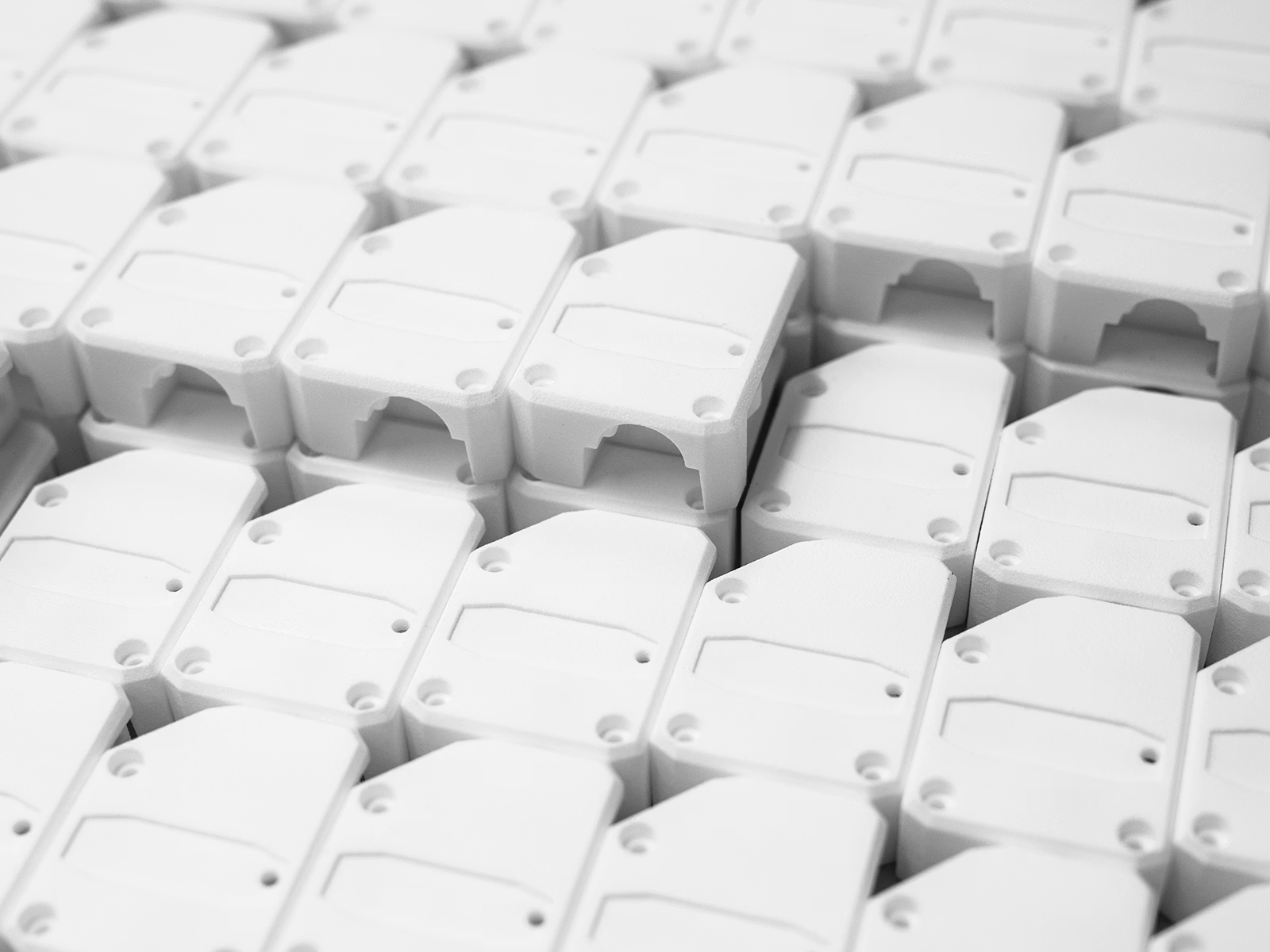
Industrial SLS Material Portfolio
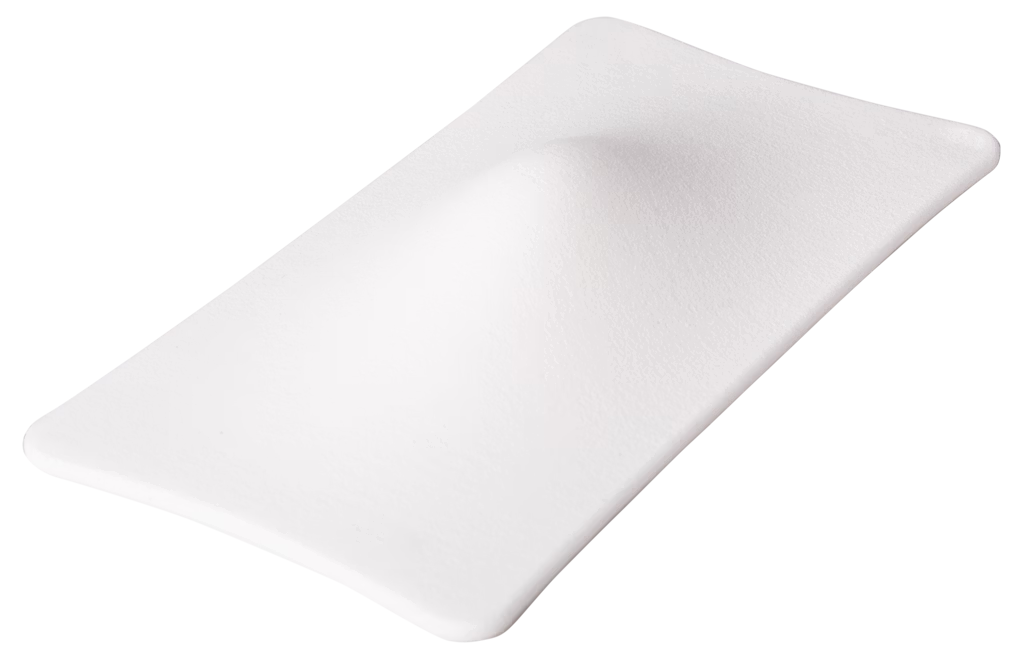
PA 2200
A versatile, strong, and durable classic for Selective Laser Sintering (SLS). It offers excellent mechanical properties, making it ideal for functional prototypes and end-use parts.
- Balanced mechanical profile
- High detail resolution and surface quality
- Proven biocompatibility

PA 2210 FR
A high-performance, halogen-free flame retardant polyamide engineered for sensitive environments where smoke toxicity and environmental impact are critical concerns.
- Integrated flame retardancy
- High tensile modulus
- Optimised for aerospace and electrical applications
PA 2241 FR
A high-performance, halogen-containing flame retardant polyamide engineered for sensitive environments where smoke toxicity and environmental impact are critical concerns.
- Formulated for flame retardancy
- Robust mechanical strength
- Optimised for aerospace and electrical applications
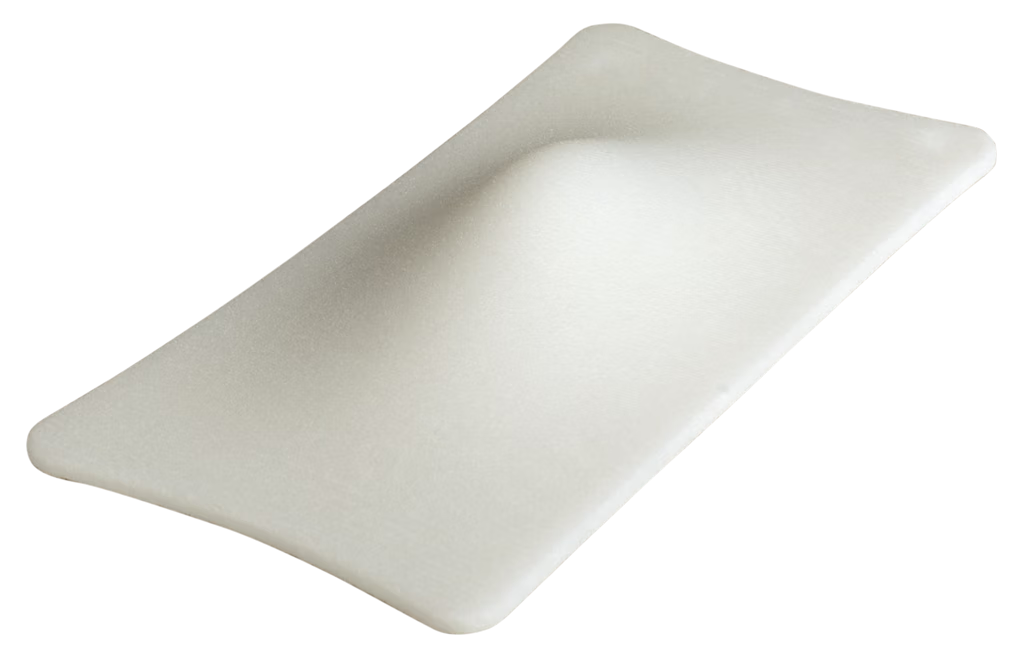
PA 3200 GF
Known for its exceptional strength and fine resolution, this Nylon 12 powder provides a smooth finish and excellent chemical resistance, perfect for complex, detailed parts.
- High structural rigidity
- Superior tensile modulus
- Exceptional thermal resistance
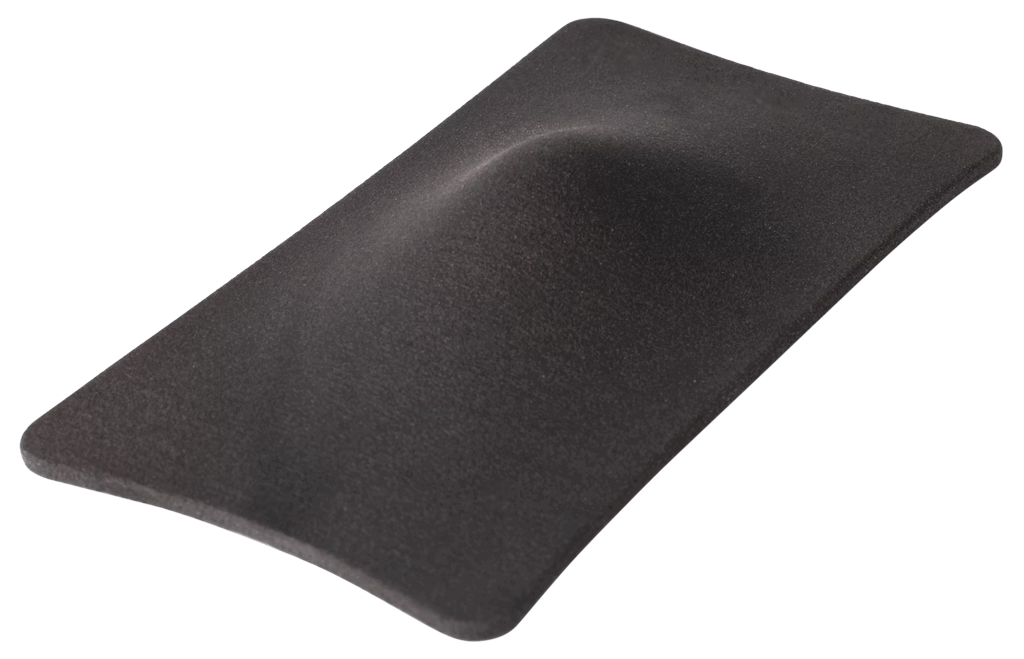
PA 603-CF
The ultimate material for high-performance engineering, PA 603-CF is a carbon-fiber-reinforced nylon offering extreme stiffness and an industry-leading strength-to-weight ratio.
- Exceptional tensile strength
- Extreme stiffness with a tensile modulus
- High-temperature stability
PA 620-MF
Reinforced with mineral fibers, PA 620-MF provides superior tensile strength and heat deflection temperatures compared to standard polyamides.
- High surface hardness
- Exceptional thermal performance
- Optimised for wind tunnel testing

PA 640-GSL
Engineered for lightweight structural integrity, PA 640-GSL is a hollow glass-sphere reinforced nylon that offers exceptional dimensional stability and low density.
- Exceptional dimensional stability
- High thermal integrity
- Suitable for weight-sensitive applications
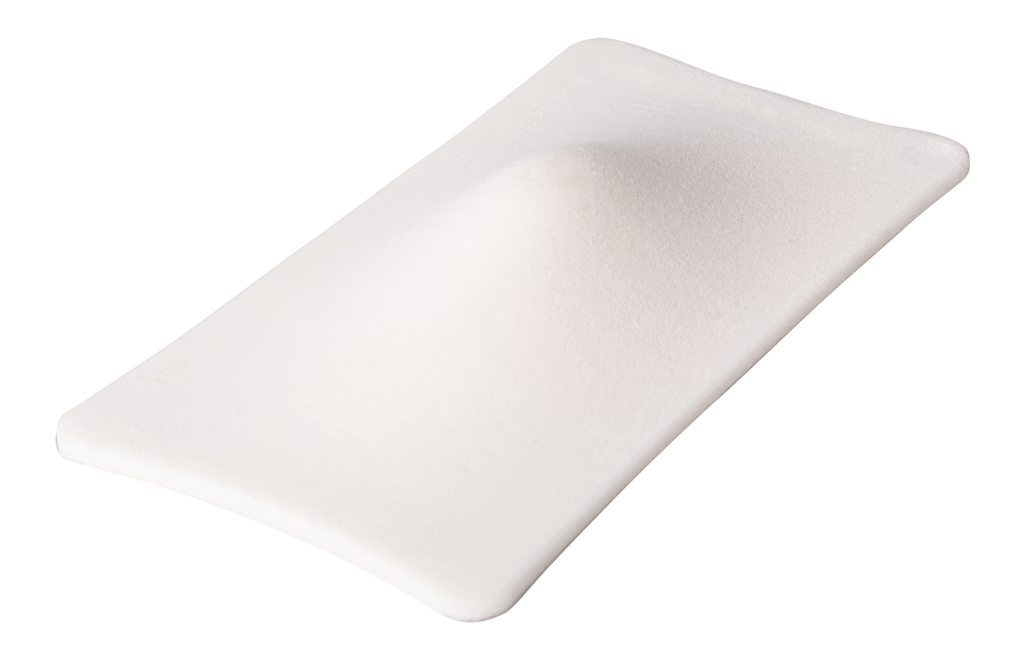
TPU 59A
Thermoplastic elastomer material with rubber-like flexibility and functionality for use with sPro 60 HD-HS.
- Abrasion resistance ideal for consumer goods (like shoe soles)
- Flexibility with excellent strength
- Difficult to tear or break
- Functional prototypes can be tested to see “real life” wear-and-tear results
- Excellent recovery memory
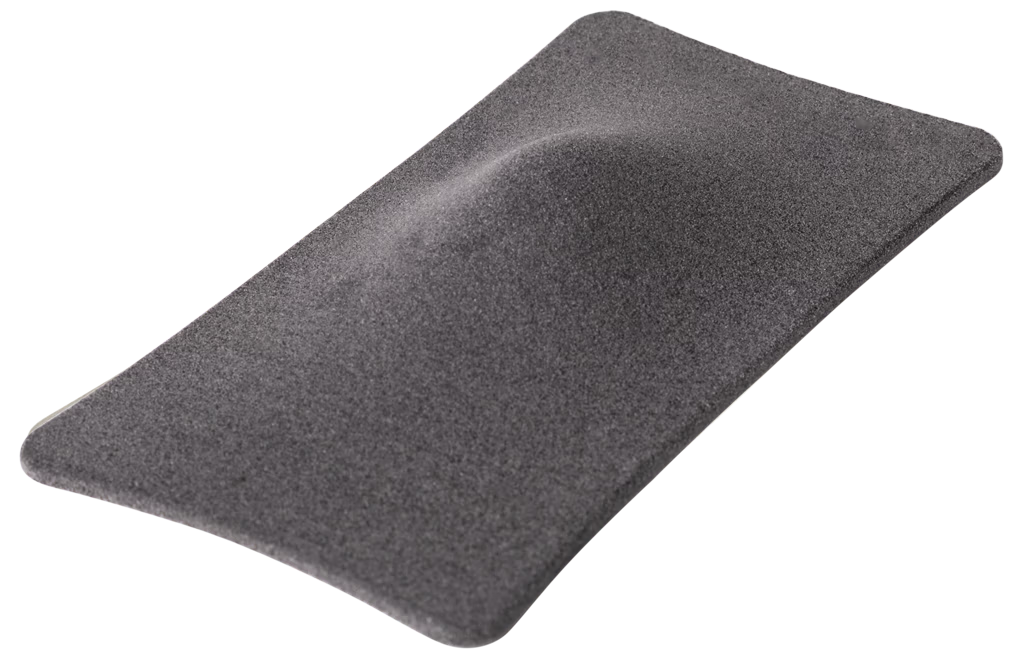
TPU 88A Black & Neutral
An elastomeric material, TPU is highly valued for its flexibility, shock absorption, and abrasion resistance, making it the go-to choice for seals, grips, and flexible connectors.
- Rubber-like flexibility and high energy return
- Exceptional durability
- Superior vibration dampening properties for protective gear and industrial buffers
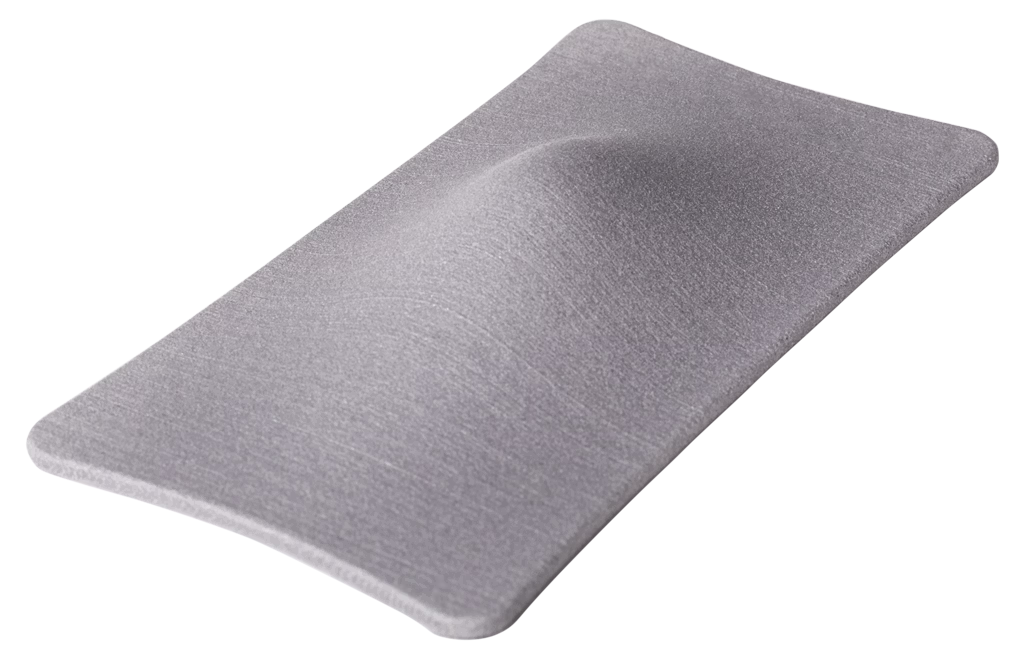
PA 12 Alu
A specialised blend of aluminum powder and polyamide, PA 12 Alu is chosen for its distinctive metallic aesthetic, excellent machinability and enhanced thermal conductivity.
- Increased thermal conductivity
- Increased heat deflection
- High stiffness-to-weight ratio

PA 11
Offering superior impact resistance and ductility compared to Nylon 12, PA 11 is derived from renewable sources, making it a more sustainable, high-performance option.
- High impact resistance and ductility
- Sourced from renewable castor oil
- Superior chemical resistance
FS3200PA-F
Offering high flexibility and ductility alongside exceptional impact and chemical resistance, FS3200PA-F delivers durable, high-quality parts with superior surface finish and excellent dimensional stability.
- High flexibility and ductility
- Exceptional impact resistance
- Excellent chemical resistance
The Mechanics of Precision: How SLS Works
Selective Laser Sintering (SLS) is the industrial standard for tool-less serial production. It is a Powder Bed Fusion (PBF) printing process that transforms digital CAD data into high-performance sintered plastic components, layer by layer, without the need for support structures – a genuine alternative to injection molding for low-to-medium volumes.
The Step-by-step Process in SLS
- Thermal Preparation: The build chamber is heated to just below the melting point of the polymer powder. This minimizes thermal distortion and ensures uniform, near-isotropic mechanical properties.
- Powder Distribution: A recoater blade spreads an ultra-thin layer of powder (typically 100–120 microns) across the entire powder bed on the build platform.
- CO2 Laser Sintering: A high-precision CO2 laser traces the cross-section of the parts, sintering (fusing) the powder particles together.
- Self-Supporting Build: Because the part is surrounded by unsintered powder during the build, no support structures are required. After the build is complete, the remaining residual powder is removed and recovered for reuse, leaving clean functional parts ready for finishing.
- Controlled Cooling: Once the build is complete, the entire “build cake” undergoes a regulated cooling phase. This is critical to prevent warping and to lock in the material’s crystalline structure.
- Post-processing: Once the cooling cycle is complete, the “build cake” is unpacked and processed according to the customers specifications i.e. vibratory finishing, vapor smoothing, dyecolouring.
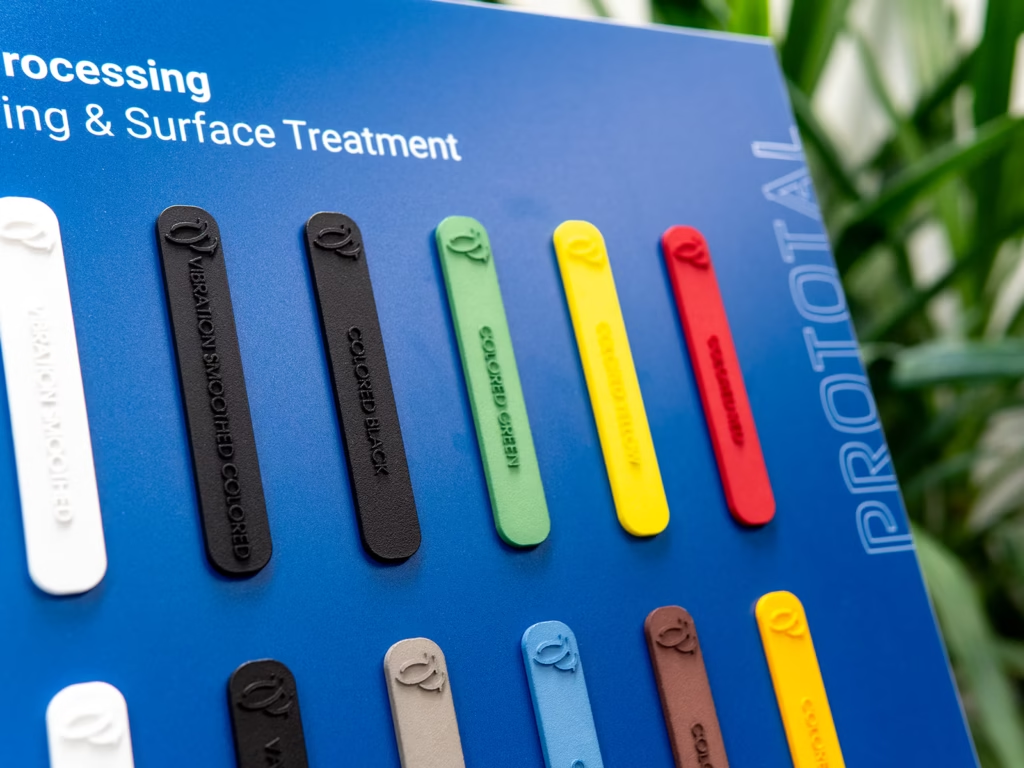
Engineering Your Perfect Surface for your SLS Part
We empower you to tailor every surface to your exact requirements — whether your application demands the high-gloss, fluid-tight seal, a refined tactile haptic, or the vibrant, scratch-resistant branding with dye-colouring.
By utilising industry-leading technology from partners like AMT, AM Solutions and DyeMansion, we ensure that your parts don’t just meet mechanical tolerances but also achieve the specific resilience your project requires.
Datasheets at a Glance
| SLS | Density (g/cm³) | Tensile strength (MPa) | Tensile modulus (MPa) | Elongation at break | Charpy IS (kJ/m² at 23°C) | HDT (°C @ ~1.8 MPa) |
|---|---|---|---|---|---|---|
| PA 11 | 1.02 | XY 52 / Z 54 | XY 1750 / Z 1800 | XY 28% / Z 24% | XY 184 / Z 85 (unnotched) | XY 76 (1.80 Mpa) |
| PA 2200 | 0.93 | XY 48 / Z 42 | XYZ 1650 | XY 18% | X 53 (unnotched) | XY 64 / Z 57 (1.80 Mpa) |
| PA 3200 GF | 1.22 | XY 51 / Z 47 | XY 3200 / Z 2500 | XY 9% | X 35 (unnotched) | XY 96 (1.80 Mpa) |
| PA 2210 FR | 1.06 | XY 46 / Z 41 | XY 2500 / Z 2300 | XY 4% | – | XY 95 / Z 108 (1.80 Mpa) |
| PA 2241 FR | 1.00 | XY 49 / Z 46 | XYZ 1900 | XY 15% | – | XY 84 (1.80 Mpa) |
| PA 603-CF | 1.10 | XY 85 | XY 7900 | XY 4% | – | XY 173 (1.82 Mpa) |
| PA 620-MF | 1.20 | XY 51 / Z 34 | XY 5725 / Z 3000 | XY 5% / Z 3% | – | XY 179 (1.82 Mpa) |
| PA 640-GSL | 0.82 | XY 49 / Z 33 | XY 3816 / Z 1945 | XYZ 3% | – | XY 170 (1.82 Mpa) |
| PA 12 Alu | 1.36 | XY 48 | XY 3800 | X 4% | – | XY 144 (1.80 Mpa) |
| TPU 59A | 0.78 | XY 2.1 | XY 5.3 | XY 200% | – | – |
| TPU 88A | 1.1 | X 8 / Z 7 | XY 75 | X 280% / Y 130% | – | – |
| FS3200PA-F | 0.52 | XY 42 | XY 1450 | XY 25-40% | – | XY 52 (1.80 Mpa) |
The data shown is indicative and intended for reference only. Material properties may vary depending on printing conditions and technology. Although care has been taken to ensure accuracy, typographical or data entry errors may occur. Please be aware that certain values in this table can be derived from different testing standards made from our suppliers, for authoritative specifications, please refer to the original manufacturer datasheets provided under each material.
Enabling the Next Industrial Revolution Together




Explore our facilities near you


3D Print Guidelines
Our helpful guides are specifically designed to assist you before submitting your design to us. We always strive to achieve the best possible outcome, and by following our guidelines, you can be confident that your design will be of the highest quality.
Get in touch with us if you need guidance, we are happy to help you!
Bring Your Design to Life
"*" indicates required fields
By submitting this form, you agree to our Privacy Policy. We use the information you provide to respond to your inquiry and provide requested manufacturing services.
Quote Your Next Project
Looking for high-quality industrial 3D printing solutions tailored to your needs? Our team is ready to provide a detailed quote for your project. Simply share your specifications, and we’ll deliver a clear, competitive estimate — no surprises, just precision and reliability.
Why choose us?
- 3D printing solutions for any scale and complexity
- Fast and accurate quoting process
- Local presence close to your business and business needs

FAQs
Whether you are navigating the transition from prototyping to serial production or optimising an existing supply chain, we are here to provide the technical clarity you need. If your specific challenge isn’t covered here, our application engineers are ready to discuss your project’s unique requirements and help you find the most efficient path to production.
Serial production refers to the repeatable manufacturing of end-use parts at scale using industrial technologies, including Industrial 3D Printing and Injection Moulding. Serial production focuses on consistent quality, validated processes, and reliable output from hundreds to thousands of parts.
At Prototal Group, we offer serial production in Industrial 3D Printing and Injection Molding. Injection Moulding has been around for a long time and is perceived as a rather traditional manufacturing technology, that’s been proven in serial production for years. Industrial 3D Printing has seen technological advancements during the more recent past, which made the development into a serial production manufacturing technology possible, fulfilling highest standards.
Prototal Group operates under certified quality management systems. These include the following
- ISO 9001 Quality
- ISO 14001 Environmental
Additionally for specialised industries
- ISO 13485 for Medical
- Clean room ISO 8 for Medical & Electronics
- AS/EN 9100 for Aerospace & Defence
- IATF 16949 for Performance Vehicles
- TISAX for IT Security
Manufacturing should not be transactional. At Prototal Group we value a partnership, which is why you will get a dedicated contact person close to your operations that knows your business and business needs. To start our future partnership, please reach out to the local team within your area that can be found under Contact us or send us an e-mail:
- Norway: post@prototal.no or +47 74 09 06 00
- Sweden: 3dp@prototal.se or +46 36 38 72 00
- Denmark: 3dp@prototal.dk or +45 43 99 37 36
- United Kingdom: info@prototaluk.com or +44 1635 635855
- Italy: info@prototalgroup.it or +39 733 892665
- Austria, Germany & Switzerland: 3dp@prototalgroup.at or +43 5572 52946-9
As a flexible partner we can offer lead times down to 1 working day depending on manufacturing technology, material selection, post-processing and quality control.*
- Industrial 3D Printing in Polymer: Typical 2-3 working days*
- Industrial 3D Printing in Metal: Typical 5-7 working days*
- Injection Moulding with aluminium tooling: Down to 15 working days*
- Vacuum Casting: Typical 6-8 working days*
*While Prototal Group offers industry-leading turnaround times, all lead times are provided as estimates. Lead times are based on standard operating conditions and the selection of the most efficient regional technology hub for your project. Final lead times are determined by local availability, the specific requirements of your order, including part geometry, material selection, and post-processing. For complex geometries that require extensive support structures or high-performance materials, we may allocate additional processing time. This ensures the structural integrity and dimensional accuracy of your components before they leave our facility. By leveraging our decentralised hub network and cross-border logistics, we work to minimise delays; however, the technical requirements of the manufacturing process remain the primary factor in our quality-assured lead times.


